차가우면 물리지 않는다. 뜨거우면 페이드한다. 그 사이에 영역이 있다.
브레이크 패드의 마찰은 온도에 따라 달라진다. 영역 아래에서는 패드가 유리처럼 미끄러워 물리지 않는다 — 더 일찍 밟고, 덜 감속하며, 코너로 길게 밀려 들어간다. 영역 위에서는 브레이크가 페이드한다 — 똑같이 손실되고, 제동력은 줄어든다. 그 사이가 바로 영역이다. 물림이 최대가 되고 제동 거리가 가장 짧아진다.
SimRace.app은 모든 제동 구간마다 네가 페달을 밟는 순간의 브레이크 온도와 실제로 얻은 감속을 기록한다. 랩을 거듭하며 곡선을 만들어 너의 영역을 찾아낸 뒤, 코너마다 네가 차갑게 제동하는지, 영역 안에 있는지, 페이드로 들어가는지 알려준다.
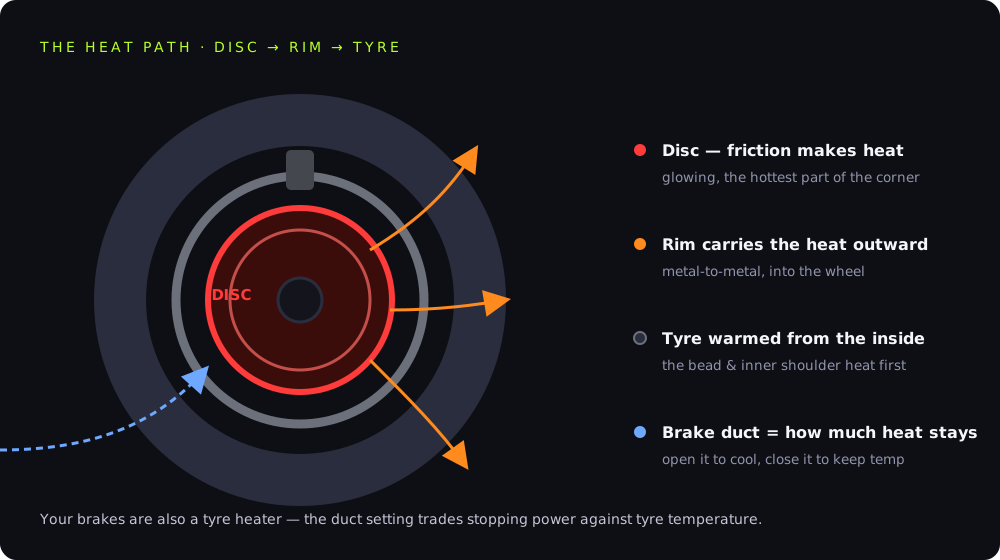
열이 이동하는 경로: 디스크 → 림 → 타이어
뜨거운 브레이크 디스크는 차를 멈추기만 하는 게 아니라 휠을 달군다. 디스크가 림을 데우고, 림이 안쪽(비드와 안쪽 숄더)에서부터 타이어를 데운다. 그러니 네 브레이크는 타이어 히터이기도 하다. 브레이크 덕트는 그 열 중 얼마가 시스템 안에 남는지를 결정한다.
브레이크 덕트가 네 레버다
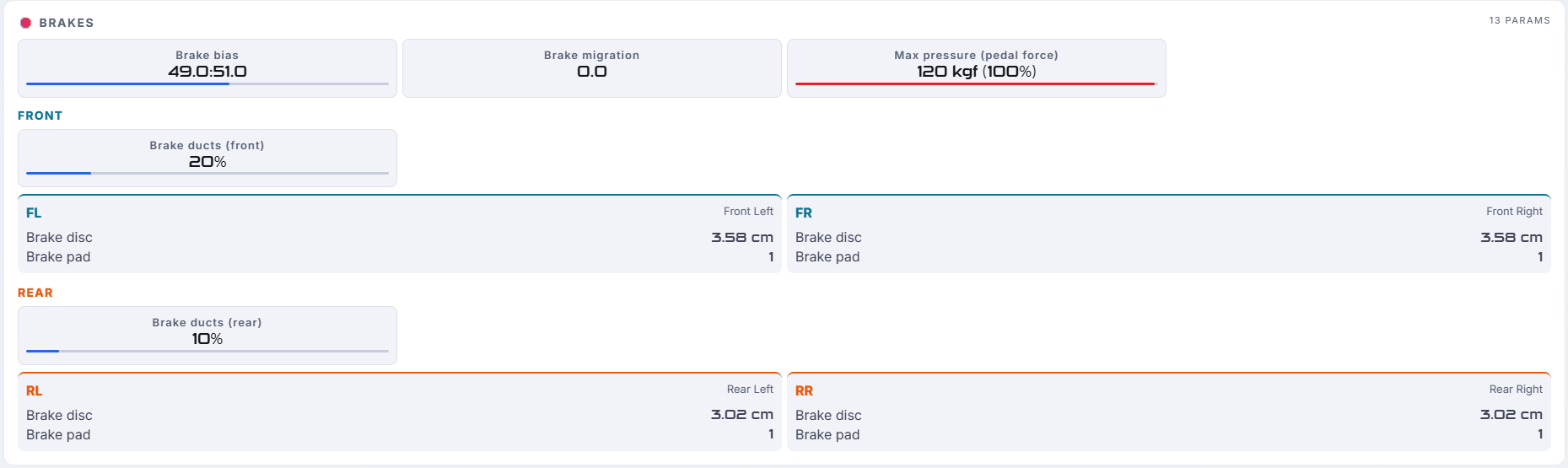
브레이크 덕트는 클릭 단위로 조정된다. 한 클릭씩 닫을 때마다 브레이크에 들어가는 냉각 공기가 줄어 더 뜨겁게 작동한다 — 그리고 림을 통해 타이어도 더 뜨거워진다. 차가운 트랙이거나 앞쪽이 영역 아래에서 제동할 때는 바로 이게 필요하다: 프론트 덕트를 한 클릭 닫으면 물림과 제동 거리가 좋아지고, 좀처럼 데워지지 않던 프론트 타이어도 따뜻해진다.
하지만 너무 많이 닫지는 마라
열은 끝까지 밀어붙이는 슬라이더가 아니라 균형이다. 너무 많이 닫으면 영역을 반대쪽으로 넘어간다: 디스크가 과열되어 페이드하고, 더 심각하게는 림이 타이어 안쪽을 익혀버린다 — 안쪽 숄더가 과열되고, 그레이닝과 압력이 폭주하며, 표면은 멀쩡해 보여도 타이어가 자기 영역을 벗어난다. 목표는 앞뒤 모두 영역 안에 머물 딱 그만큼의 열이지, 최대치가 아니다.
⚠ 이건 기계공학적 절충이다
브레이크 온도, 림 전도, 타이어 내부 온도, 페이드, 패드 마모가 모두 함께 움직인다. 한 클릭 과하면 첫 랩에는 도움이 되지만 스틴트를 망친다. SimRace.app은 브레이크 영역과 타이어 영역을 저울질해 둘 다 만족시키는 클릭을 알려준다 — 그게 바로 엔지니어링이고, 너 대신 해준다.
어디에서 작동하는가
브레이크 열적 작동 영역은 Le Mans Ultimate에서 동작한다. 여기서는 브레이크 열 모델과 휠별 브레이크 온도가 텔레메트리에 완전히 노출된다(rFactor2도 같은 엔진을 공유한다). 다른 시뮬레이터는 브레이크를 다르게 모델링한다 — iRacing과 Assetto Corsa 계열은 브레이크 열 사슬을 덜 노출하므로, 동일한 정확도를 주장하기 전에 검토 중이다. 떳떳하지 못한 수치를 주느니 « 지금은 Le Mans Ultimate »라고 말하는 편이 낫다.
자주 묻는 질문
- 왜 브레이크 온도가 제동 거리를 바꾸나요?
- 패드 마찰에는 온도 영역이 있다. 그 아래에서는 패드가 물리지 않고(길게 밀려 들어간다), 그 위에서는 페이드한다. 영역 안에서는 물림이 최대가 되고 제동 거리가 가장 짧다. 우리는 네 자신의 랩에서 네 영역을 찾아낸다.
- 브레이크가 어떻게 타이어를 데우나요?
- 디스크 열이 림으로 전도되고, 림이 안쪽에서부터 타이어를 데운다. 그래서 더 뜨거운 브레이크가 타이어 카커스에 열을 공급한다 — 덕트를 닫으면 차가운 타이어를 영역 안으로 데려올 수 있는 이유다.
- 항상 덕트를 닫아야 하나요?
- 아니다. 차갑게 제동하거나 타이어가 영역 아래에 있을 때 한 클릭 닫아라. 너무 많이 닫으면 브레이크가 페이드하고 타이어 안쪽이 과열된다. 영역 안에 머물 딱 그만큼만 — 최대치가 아니다.
- 어떤 시뮬레이터에서 되나요?
- 현재 Le Mans Ultimate(그리고 같은 엔진인 rFactor2). iRacing과 Assetto Corsa 계열은 브레이크를 다르게 모델링하며 검토 중이다.
독립 도구이며 이 시뮬레이터들과 호환된다 — 명칭과 상표는 각 소유자에게 귀속된다(제휴, 보증, 후원 관계 없음).