Brake engineering · Le Mans Ultimate

The Brake Thermal Window

Brakes have a temperature window — too cold they won't bite, too hot they fade. We read your braking distance and deceleration against brake temperature at the bite point, and the brake duct that feeds heat into your tyres through the rim.

Available on Le Mans Ultimate today · more sims being evaluated

Cold won't bite. Hot fades. There's a window in between.

Brake-pad friction depends on temperature. Below the window the pads are glassy and don't bite — you brake earlier, decelerate less and run deep into the corner. Above it the brakes fade — same loss, less stopping power. In between is the window, where bite peaks and the braking distance is shortest.

SimRace.app records, for every braking zone, your brake temperature at the moment you hit the pedal and the deceleration you actually got. Lap after lap it builds the curve and finds your window — then tells you, corner by corner, whether you're braking cold, in the window, or into fade.

How the heat travels: disc → rim → tyre

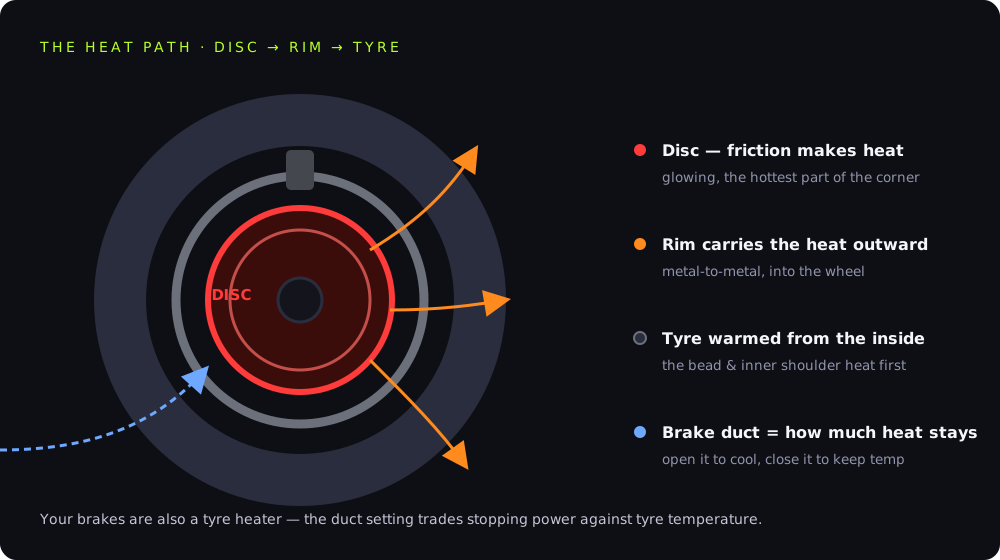
A hot brake disc doesn't only stop the car — it heats the wheel. The disc warms the rim, and the rim heats the tyre from the inside (the bead and inner shoulder). So your brakes are also a tyre heater. The brake duct decides how much of that heat stays in the system.

Hypercar racing wheel with a glowing red brake disc behind the rim — heat travels from disc to rim to tyre
Heat from the glowing disc travels through the rim into the tyre. Illustration — decorative bands only, not affiliated with any tyre manufacturer.

The brake duct is your lever

Brake ducts are adjustable in clicks. Each click you close feeds the brakes less cooling air, so they run hotter — and, through the rim, your tyres run hotter too. On a cold track, or when your fronts are braking below their window, that's exactly what you want: close the front ducts one click and you get better bite and a shorter stop, while warming a stubborn front tyre.

"Your fronts are biting cold into Turn 1 — you're braking ~4 m long. Close the front brake ducts one click. It lifts the discs into the window and feeds the front tyres through the rim."— Brakes engineer
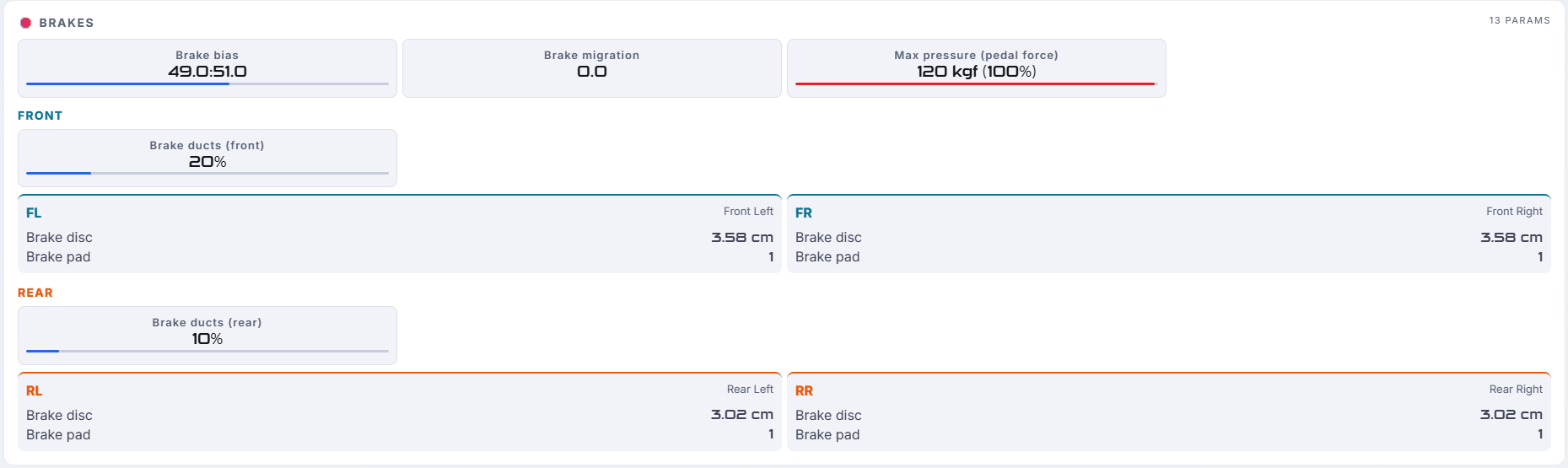
SimRace.app live BRAKES panel — brake bias, max pedal force, front/rear brake-duct percentage and per-corner disc and pad wear
The live BRAKES panel — your duct setting (front/rear), bias, pedal force and disc/pad wear. Read it against the temps, then close a click.

But don't close too many clicks

Heat is a balance, not a slider you push to the end. Close too many clicks and you cross the window the other way: the discs overheat and fade, and worse, the rim cooks the inside of the tyre — the inner shoulder overheats, grain and pressure run away, and the tyre falls out of its own window even if the surface looks fine. The goal is just enough heat to sit in the window, front and rear, not the maximum.

⚠ It's a mechanical-engineering trade-off

Brake temp, rim conduction, tyre inner temp, fade and pad wear all move together. One click too far helps the first lap and ruins the stint. SimRace.app weighs the brake window against the tyre window and tells you the click that serves both — that's the engineering, done for you.

Where it works

The Brake Thermal Window is live on Le Mans Ultimate, where the brake thermal model and per-wheel brake temperatures are fully exposed in telemetry (rFactor2 shares the same engine). Other sims model brakes differently — iRacing and the Assetto Corsa family expose less of the brake-thermal chain, so we're evaluating them before claiming the same accuracy. We'd rather say "Le Mans Ultimate for now" than give you a number we can't stand behind.

Frequently asked

Why does brake temperature change braking distance?
Pad friction has a temperature window. Below it the pads don't bite (you run deep); above it they fade. In the window bite peaks and the stop is shortest. We find your window from your own laps.
How do brakes heat the tyres?
Disc heat conducts into the rim, and the rim heats the tyre from the inside. So hotter brakes feed the tyre carcass — which is why closing the ducts can bring cold tyres into their window.
Should I always close my ducts?
No. Close a click when you're braking cold or your tyres are below their window. Close too many and you fade the brakes and overheat the inner tyre. Just enough to stay in the window — not the maximum.
Which sims is it on?
Le Mans Ultimate today (and rFactor2, same engine). iRacing and the Assetto Corsa family model brakes differently and are being evaluated.

Independent tool, compatible with these simulators — names and trademarks belong to their respective owners (not affiliated, endorsed or sponsored).